
Buy Sensitive Sanitary Pads Online: Gentle Protection for Every Period
All women should have access to period care that make them feel comfortable all day
Your body doesn’t just wake up one morning and decide it’s finished with hormones; perimenopause is more of a quiet tiptoe, followed by crazy chaos.
Understanding your body, perimenopause symptoms, from sudden mood swings to periods of insomnia or oversleeping, can help ease things when it’s that time of the month.
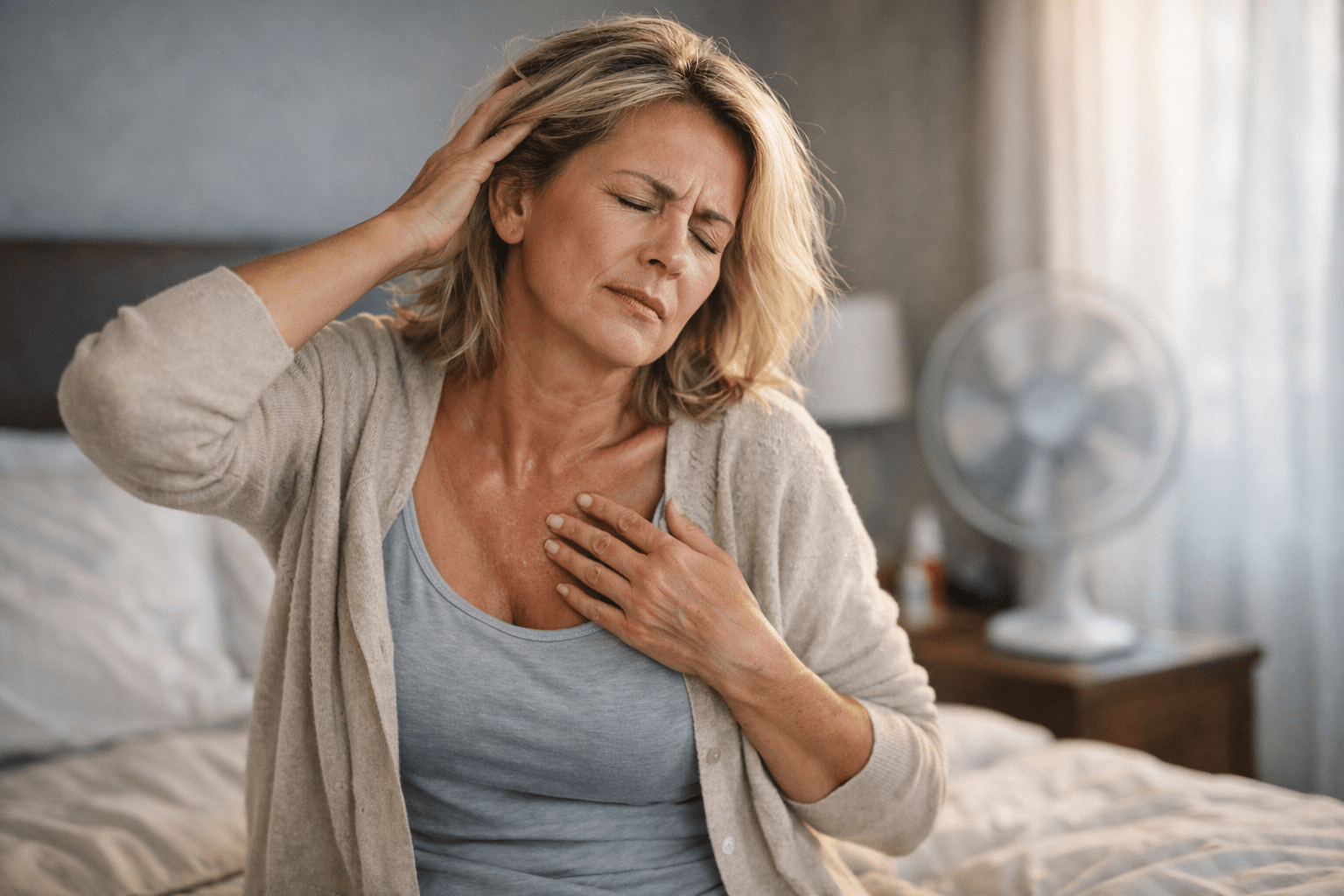
Perimenopause is the time leading up to menopause, when your ovaries are winding down their estrogen production. This hormonal shift impacts several systems in the body, which is why the experience can seem random.
Unlike with menopause, which is defined as occurring 12 months after a woman’s last menstrual period, perimenopause can begin years earlier and involves physical and emotional changes. For many women, it is a surprise how early and diverse these changes can be.
Moreover, to learn more about this, and a detailed look at the hormonal fluctuations and body changes associated, read this out, what is perimenopause.
Among the most frequent questions women pose is, “At what age perimenopause starts?” For most women, perimenopause starts in their late 40s to early 50s, but this isn’t a fixed time frame.
Some women have early signs in their mid-30s, particularly if they have a family history of early menopause, certain medical conditions, or lifestyle issues, such as smoking.
This period often coincides with what we commonly call the premenopausal age, when fertility begins to decrease but periods have not completely stopped. This could help women detect changes earlier rather than associating them with stress or getting older.

The average duration of perimenopause is 4 to 8 years, but for some women, this phase may be shorter or longer.
The length varies according to genetics, lifestyle, overall health, and how the body’s hormone levels respond to changes. It feels like a lot, but recognizing the timeline can be calming and set realistic expectations.
The symptoms are different for everyone. Some women observe slight changes, and others have symptoms that interfere with daily life.
Here are some perimenopause symptoms women commonly complain about:
These perimenopause symptoms can occur slowly or sporadically, and that makes them more difficult to attribute to hormonal changes.
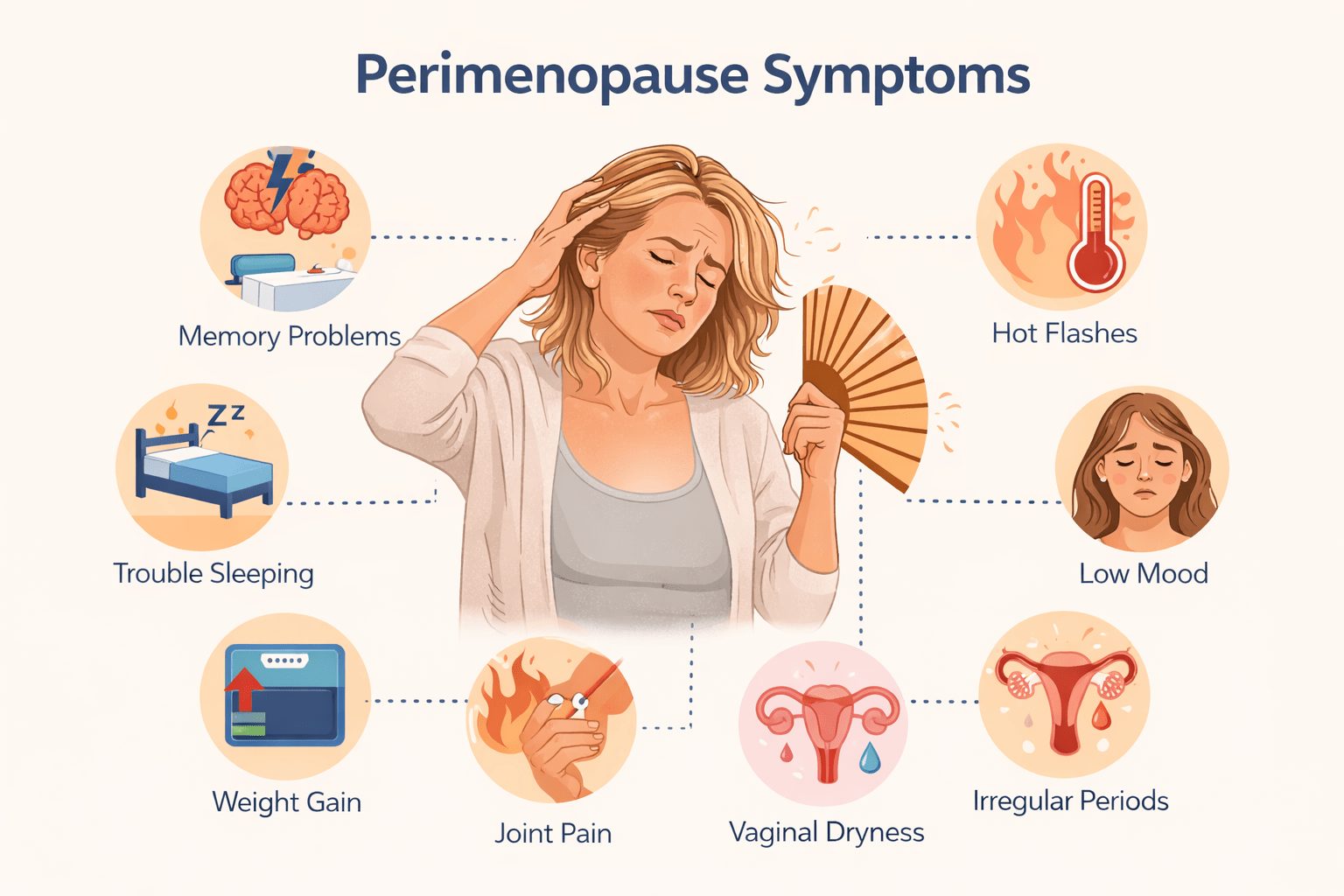
The symptoms of early perimenopause are typically mild and can be easy to miss. For many women, changes in the menstrual cycle. Starting with one skipped period and eventually progressing to several months during which a period is missed. It is followed by an irregular or impossible-to-predict schedule before menstruation stops entirely, and hot flashes are often the first signs.
Other early signals can be unexplained anxiety, difficulty sleeping, or feeling emotionally “off” without realizing why. Because these symptoms don’t all come at the same time, women may not recognize right away that they’re entering perimenopause.
Early identification would enable a more effective management of symptoms and mental preparation.
Perimenopause isn’t a straight line. It happens in stages, each with its own hormonal patterns and problems.
This stage typically starts when they’re in their early 40s, but it can start sooner. Periods can still be regular at this age, but symptoms such as mood changes, sleep disturbances, or subtle shifts in the cycle show up.
The ups and downs of hormones this week become greater and more apparent. Menstrual cycles can become erratic, and hot flashes or night sweats are more prevalent.
The intervals between cycles might be long, with worsening of the signs and symptoms. Estrogen levels decrease in a more regular fashion, and fertility decreases dramatically during this time.
This last phase transitions into menopause. Perimenopause officially ends when a woman has not had a period in 12 consecutive months.
Every woman has different symptoms, and the severity of symptoms can be affected by such factors as level of stress, diet, quality of sleep, and presence of other health conditions.
Some women go through perimenopause with no complaints, while others require lifestyle changes or medical support in order to feel “balanced” once more. There is no “right” or “wrong” way to do this phase, only what’s best for your body.
If symptoms of perimenopause are affecting your quality of life, it’s worth talking to a doctor, who can help you decide if treatment is right for you. Very heavy bleeding, extreme mood changes, or symptoms that disrupt work or relationships should not be ignored.
A doctor may be able to rule out other causes and recommend treatment options customized for you.
Perimenopause is not a failure; it’s an evolution. Understanding the symptoms, stages, and timeline can turn confusion into confidence. The knowledge can help you feel more in control of your body during this important phase of change.
Early symptoms can include irregular periods, sleep problems, mood changes, anxiety, and fatigue.
There’s no single best treatment. These may include diet and lifestyle changes, hormone therapy, stress management, support with nutrition, in addition to medical treatment for specific symptoms.
Keeping to a fixed sleep schedule, eating well, exercising often, and engaging with stress reduction exercises can keep mood and energy levels steady.
Most women start perimenopause between 40 and 45, but some have symptoms before or after.
These four stages are early perimenopause, mid perimenopause, late perimenopause, and the menopausal transition.
All women should have access to period care that make them feel comfortable all day

Choosing the better menstrual products shouldn’t cost you more. The awareness of sustainability, a natural
However, when you have a heavy period, it can be stressful because you’re constantly worried

Heavy flow at work & school makes life difficult in its own right, especially when
All women should have access to period care that make them feel comfortable all day
Choosing the better menstrual products shouldn’t cost you more. The awareness of sustainability, a natural
However, when you have a heavy period, it can be stressful because you’re constantly worried
Heavy flow at work & school makes life difficult in its own right, especially when