
Buy Sensitive Sanitary Pads Online: Gentle Protection for Every Period
All women should have access to period care that make them feel comfortable all day
Periods don’t always go in the same fixed manner. Sometimes they come in a strong and heavy flow, while other times they’re barely showing up, with little to no flow.
In this case, a light and heavy flow on and off isn’t an issue, but if you’re seeing a consistent scanty period, it could bring up some questions.
However, of course, knowing what your body is telling you can allow you to take action in time, comfortably and confidently.

Low period flow or scanty period indicates a menstrual flow that is very light compared with your usual period. There may be non-uniform rather than constant bleeding and little or no visible blood.
You may experience:
Some women have regular but scanty periods, where their cycle comes every month and on time, but with lighter bleeding.
Low period flow doesn’t have a complex definition, but it usually means that you’re losing much less blood than the average amount lost during your menstrual cycle.
Low flow may look like:
So, what to do if your periods are light? Scanty periods have an array of causes. These irregular periods can be caused by any number of hormonal, physical, or lifestyle factors.
Your hormones tell your uterus lining how thick to get. The lining remains thin and bleeds lightly when estrogen levels are low.
Common hormonal triggers include:
PCOS is a condition in which ovulation and hormone balance are disturbed. Irregular Cycles Though many women have irregular cycles, some women experience regular but scanty periods at least in part because their bodies don’t ovulate consistently.
A thin uterine lining is often what a lot of hormonal contraceptives do, and you can get much lighter bleeding as a result.
These include:
If you aren’t getting enough nutrition, aren’t getting enough iron, or if you tend to have a restricted way of eating, it can inhibit hormone production and decrease menstrual flow.
Sometimes what seems like a light period is actually implantation bleeding, which is an early sign of pregnancy.
Light periods, once in a while, are often nothing to worry about. When to see a doctor, passing light-colored blood clots with little flow that last longer than two days is not usual and may be an indication of some health conditions.
Potential concerns include:
Any light period that continues over a few months should be checked by a doctor.
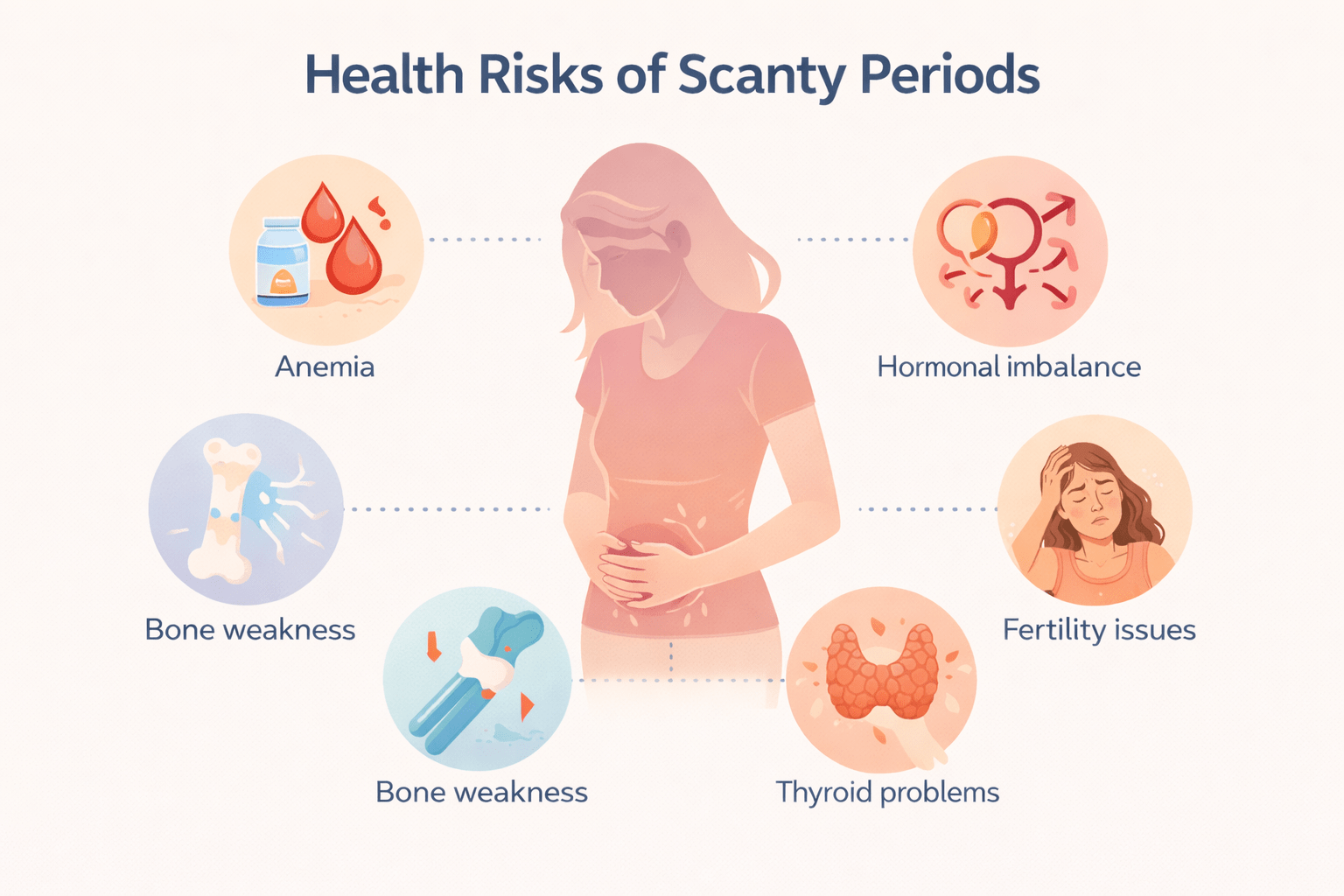
Not always. An occasional light cycle can occur as a result of stress, illness or changes to your regular routine. The problem is when low flow becomes your new normal.
Pay attention to:
Listen, your body speaks to you in patterns.
There’s no single treatment for scanty periods. However, the treatment depends on the precipitating factor.
Doctors may suggest:
Little daily shifts can help maintain hormonal equilibrium.
Helpful steps include:
Consistency is key when it comes to healing your cycle.

Just because it’s light doesn’t mean there is no pain. Spotting and low flow can still be bothersome, uncomfortable or anxiety-provoking, especially if the wrong products are being used.
The best sanitary pads to go for are the ones that give you protection without feeling like a bundle of cotton under there.
Find ultra-soft, breathable period care at Embrace:
Yes. Pregnancy can occur if ovulation takes place. However, having a long history of scanty periods may have an effect on implantation, and you need to consider it.
In some cases, yes. Low-period flow can make implantation difficult, but you may want to treat the condition and improve the results.
Common causes include:
No, a light period every month for a few months should be checked medically to rule out some hormonal or reproductive problems.
Not always. Light periods have more to do with the health of your uterine lining than egg quality. The health of eggs can be measured only through medical tests.
Light or scanty periods aren’t necessarily a sign of trouble, but not treating them for too long isn’t smart, either. Knowing why, finding the right treatment options and making the most natural choice for period care helps you take control.
Stay informed and make the right decisions about yourself!
All women should have access to period care that make them feel comfortable all day

Choosing the better menstrual products shouldn’t cost you more. The awareness of sustainability, a natural
However, when you have a heavy period, it can be stressful because you’re constantly worried

Heavy flow at work & school makes life difficult in its own right, especially when
All women should have access to period care that make them feel comfortable all day
Choosing the better menstrual products shouldn’t cost you more. The awareness of sustainability, a natural
However, when you have a heavy period, it can be stressful because you’re constantly worried
Heavy flow at work & school makes life difficult in its own right, especially when