
Heavy Flow Pads with Wings for Leak-Free Period
A good period protection is essential, and when it does its job, no matter where
Stress messes with more than just your mood. It can even affect your body in many ways, like changing your menstrual cycle.
Women under stress might also experience delayed periods or early periods, and some go on to develop heavy menstrual bleeding. Stress is not directly responsible; however, it does affect the hormones that regulate a normal cycle.
We will understand can stress cause heavy periods, how stress and menstruation are related, and what you can do if you think the relationship is affecting your periods.
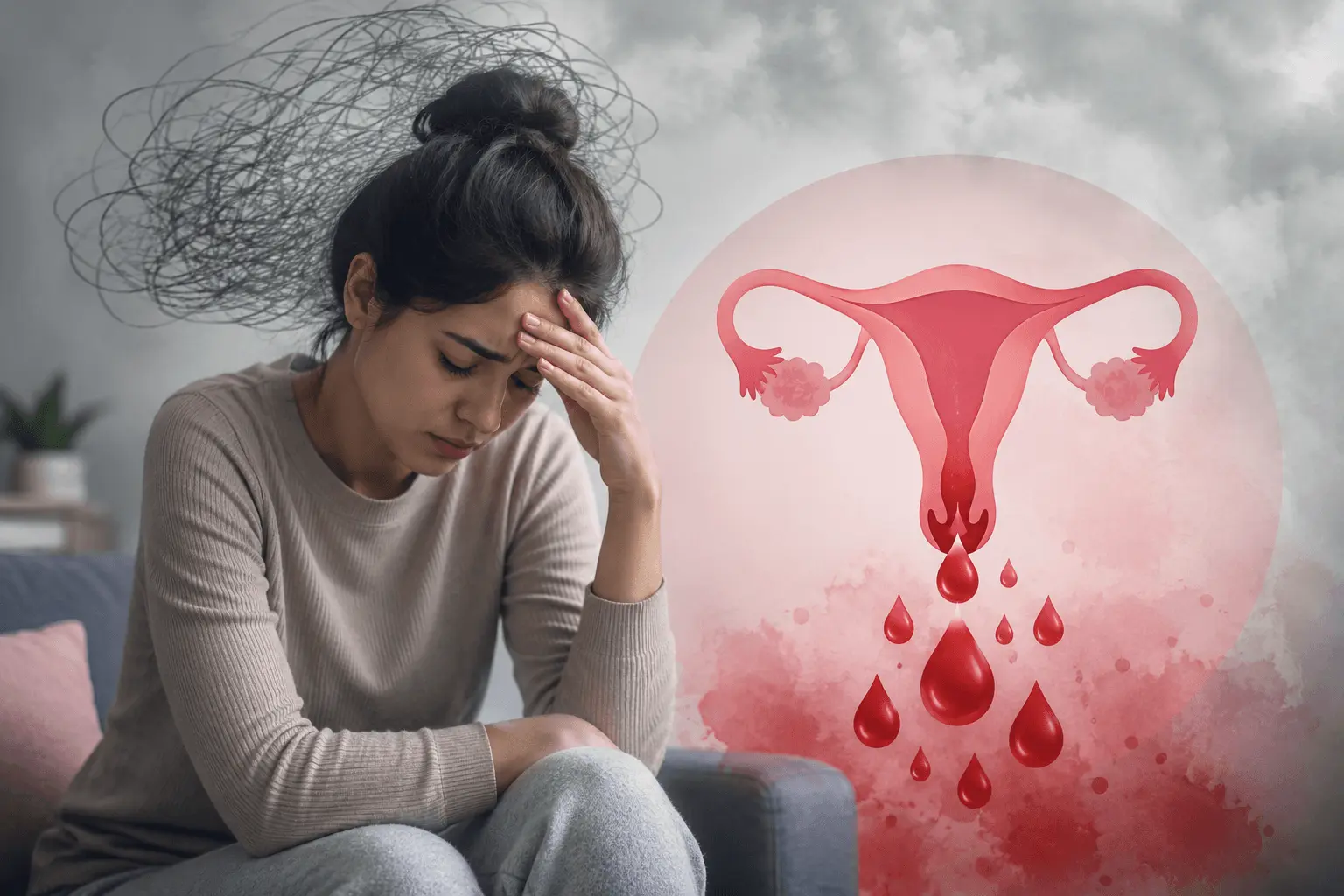
Do you want to know how stress affects the menstrual cycle?
Your menstrual cycle relies on connection between your brain, ovaries, and hormones. It is known as regulating the menstrual cycle.
Want to know the relationship of stress and menstrual cycle? Your body changes what it prioritizes when you’re under emotional or physical stress. It will release stress hormones, which can stop normal hormone production, rather than focus on reproduction. This results in irregular cycles especially in regard menstruation and heavy bleeding.
Can stress make your period heavier? Yes, where stress becomes chronic, it can play a role in altered menstrual flow.
Stress and hormones appear to share a complex relationship.
Your body produces an increased amount of the stress hormone cortisol when you are stressed. High cortisol can block estrogen and progesterone, which are hormones responsible for ovulation and regulating the menstrual cycle.
This hormonal imbalance can eventually cause:
There can be many different effects that differ from individual to individual, but stress causes hormonal changes that have a huge impact on the menstrual health of women.
Heavy menstrual bleeding is when your flow is heavier than usual, or lasts for more than seven days.
Stress is not the only associated factor, but it does play a role by altering hormonal patterns. Irregularity in ovulation can mean that the uterus builds up differently, and when your period does arrive, you might get a heavy menstrual flow.
If you ask, does anxiety cause heavy menstrual bleeding? No anxiety by itself doesn’t causes too much bleeding, but long-standing anxiety can escalate your levels of stress hormones that influence your cycle. This explains the relation between anxiety and menstruation.
It stimulates your response to stress, however excess cortisol can interfere with reproductive hormones.
High cortisol levels may:
This explains how stress affects the menstrual cycle and how emotional stress occasionally shows as physical menstrual symptoms.
Heavy bleeding is not always caused by stressful events. The following are the stress-related period changes:
Common signs include:
Physical symptoms may come with emotional changes as mental health and periods are closely connected, resulting in anxiety or mood swings.
When we say stress, not all types looks the same.
The types of stress help understanding menstrual irregularities:.
Sometimes, stress can cause heavy bleeding, and at other times it might not even be the reason behind it.
Menorrhagia can also be due to:
You should see a doctor if your bleeding is especially heavy, lasts longer than a week or makes you feel dizzy, in much pain, or passes blood clots.
Stress reduction can give you more balanced hormonal environment, which over time leads to improved menstrual health.
Helpful habits include:
Lookibg for thick pads for heavy periods, these Embrace Maxi Thick Extra Long Trio Pack, these pads have great absorbency, leak protection, and comfort for night or daytime.
healthy habits can have a very positive impact on how your body fights stress.
Remember to:
Stress can do a whole lot more than play havoc with your mental fitness. As well as impacting hormone levels, it can also disrupt the regulation of our menstrual cycle, leading to heavy or irregular periods. Changes can occur from time to time, as they are perfectly normal; however, heavy bleeding over a continuous period of time should never be ignored.
Stress management, overall health support, and high-absorbency protection like Embrace sanitary pads can make heavy days of your menstrual cycle more manageable as you focus on achieving better hormonal harmony.
You are using a heavy sanitary pad when you have a heavy flow, and you leak frequently, or if you want an extra safety cover for the first few days of your period, or overnight.
Thick sanitary pads are designed to absorb much more fluid than traditional pads, providing long-lasting protection during heavy periods.
Yes. Longer pads come with more extensive coverage to provide you with ultimate overnight protection against leaks during sleep time.
These pads are equipped with ultra absorbent cores and leak barriers, specifically to protect you against side spillages even during heavy periods.
Choose the pad you want according to your flow and daily activities. Best for heavy flow, overnight protection, or whoever wants maximum coverage and protection, choose extra-long, thick pads.
Modern thick pads are made from soft and breathable material that provides comfort with superior absorbency, and are perfect for all-day wear during heavy flow.
A good period protection is essential, and when it does its job, no matter where

We know that the right sanitary pad makes all the difference to how you feel
Stress messes with more than just your mood. It can even affect your body in

All women should have access to period care that make them feel comfortable all day
A good period protection is essential, and when it does its job, no matter where
We know that the right sanitary pad makes all the difference to how you feel
All women should have access to period care that make them feel comfortable all day

Choosing the better menstrual products shouldn’t cost you more. The awareness of sustainability, a natural